
Reflections - Imperial Threads Workshop Series
Fahri Karakas
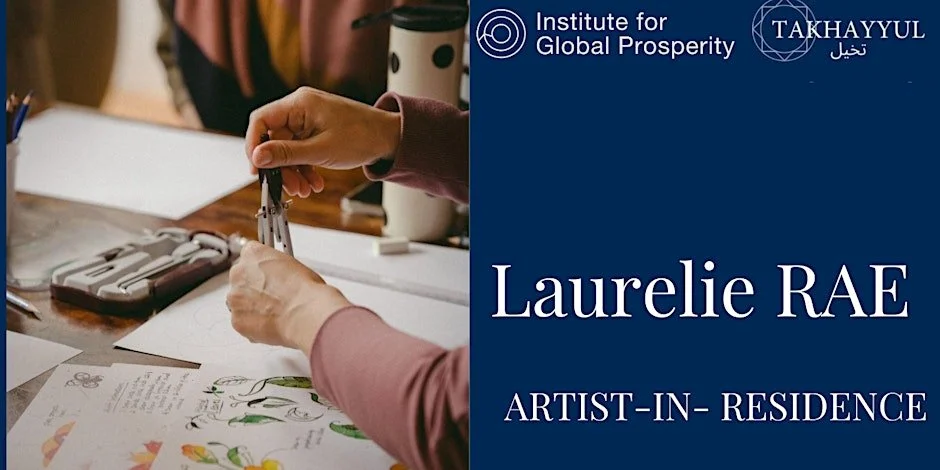
Image Source
When we think of Islamic Art, we tend to picture intricate geometric patterns graced with divine calligraphy in awe-inspiring architectural wonders. Think of historical mosques and tiles decorated with Islamic geometric designs (repeated patterns, including triangles, squares, stars, circles characterised by symmetry).
What we might not consider, however, is the beauty and deep history woven within the textiles that dress civilisations and empires.
The Institute for Global Prosperity (IGP), UCL, hosted the Imperial Threads Workshop Series on four dates in February and March. The workshop series organised by Dr Sertac Sehlikoglu, and led by Artist-in-Residence Laurelie Rae, opened my eyes to the motifs, materials, and imperious stories intricately threaded through the textiles of the SWANA (Southwest Asian and North African) region.
During each of these four workshops, we explored the links between motif, material and empire through patterns found on clothing from the SWANA region and learned about the contextualising history of each textile and Islamic Art tradition.
Laurelie showed us the canonical textile examples from the Ottomans, Safavids and Mughals while juxtaposing them with lesser-known examples, such as West African indigo fabrics. She guided us through the process of drawing, painting, and constructing as we followed her example using our own materials (compass, rules, pencils, pens, sketchbooks, and watercolours).
Understanding The Everyday Fabric of Life, Art, and Craft in the Former Islamic Empire
This workshop series has been a testament to understanding the everyday fabric of life, art, and craft in Islamic empires. Instead of populist and reductionist political perspectives, the workshops emphasised a nuanced understanding of aesthetics, art, craft, culture, and life in these former empires.
This reflective essay seeks to contextualise the workshop within the larger framework of the Takhayyul ERC project and present an insightful glimpse into the intimate connections between art, craft, aesthetics, and spirituality in the fabric of daily life in former Islamic empires.
Delving into the Fabric of Empires
From the iconic Ottomans, Safavids, and Mughals to the lesser-known Palestinian tatreez, Uzbek doppi, and West African indigo fabrics - the Imperial Threads workshop delved into the canonical and the hidden, offering a fuller perspective of the SWANA region’s textile traditions.
What fascinated me the most was how, through the process of learning to create motifs and patterns, we also unravelled the interwoven history and socio-cultural influences behind each textile form. Laurelie Rae’s vision of exploring the literal and metaphorical threads that connect empires and clothing was magnificently brought to life in each workshop.
The discussions on tropes surrounding Islamic Art emphasised the need to break out of the limited perspectives we often find ourselves confined to (colonialism, rationalism, domination, mastery, objectivity, modernism, etc.).
Breaking the Weave of the Canon
The inclusion of non-canonical textiles challenged my preconceived notions of Islamic Art. This inclusive approach to exploring the richness behind lesser-known examples revealed the extensive cultural dialogues and exchanges that have existed throughout time, adding complexity and beauty to their stories. It became evident that the term “Islamic Art” often limits our understanding, and a broader, decolonised perspective is necessary.
This fresh perspective, pioneered by Laurelie Rae, emphasises the multiplicity of forms, tapestries, and threads that represent everyday life in former Islamic empires.
As I deepened my understanding of Islamic Art and textile traditions, I appreciated how multidisciplinary and multicultural these art forms were. The way in which textiles transcend borders and cultures, intertwining history and culture, is captivating. Each strand of fabric seemed to represent a thread of history, a story connecting people, empires, and cultures far and wide.
Creative Reflections and Discoveries
Participating in the Imperial Threads workshop ignited my creativity and curiosity, inspiring me to consider an additional dimension to the art of storytelling. As I delved into the process of drawing and doodling these patterns, time slowed down.
I found myself walking in the footsteps of artists, designers, workers, and artisans of former empires. Lost in time. Transcendent. Embedded in human histories. Islamic art forms often spoke more profoundly than the written word, illuminating everyday life and culture spanning multiple geographies, centuries, political regimes, and ethnic boundaries.
The artistic techniques, lessons, and shared experiences Laurelie showed us allowed me to achieve a richer understanding and appreciation of the cultural diversity and multifaceted art forms inherent in former Islamic empires. In an increasingly globalised world where borders, biases, and racism hinder our common humanity, the Imperial Threads workshop highlights the diverse and shared histories enmeshed in the fabric of our collective pasts.
Textile traditions exhibit the splendour and skill of their makers, and also weave together inextricable tales of empires, cultures, and societies. As a participant in this enlightening journey of threads, I am grateful for the enriching opportunity to deepen my understanding, appreciation, and connection to the daily lives and artistic wonders of humans in former Islamic empires.
Contextualising the Imperial Threads Workshop within the Takhayyul Project
As a part of the Takhayyul project, the Imperial Threads workshops made a convincing case for appreciating Islamic empires through aesthetics, culture, and life, rather than through the lens of populist Islam.
By focusing on textiles, motifs, and the intricate craftsmanship of the SWANA region, the workshops unleashed an intricate tapestry of interconnectedness and shared stories that go beyond the realm of simplistic Islamic political narratives. The study of textiles as an ethnographic exercise provides a unique opportunity to explore the subtleties and complexities of Islamic empires.
By invigorating the workshop participants’ creativity and encouraging them to engage with the processes behind the creation of these textile motifs, they are granted an unparalleled insight into the craft’s associated culture, history, and socio-political influences.
Situating the Imperial Threads Workshop within the broader scope of the Takhayyul Project offers an alternative perspective on populist religious aspirations — one that fosters a deeper appreciation for the diversity and cultural richness of these regions.
A Different Lens on Islamic Empires: Aesthetic and Cultural Insights
Laurelie’s exploration of non-canonical textile traditions urged us to challenge our preconceived notions of what “Islamic Art” entails, ultimately promoting a broader, more decolonised perspective.
The workshops encouraged us to shift our focus from the frequently reductive, populist perspectives of Islamic empires towards a more comprehensive and nuanced understanding of their cultural expressions. The workshops offered an invaluable perspective on the Islamic empires that honours their aesthetic and cultural complexity.
By unravelling the imperial threads that weave together stories of art, craft, and life, we gained a deeper appreciation for the richness of these interconnected civilisations. The workshop series is a testament to the importance of considering Takhayyul (imagination) in understanding political worldviews and aspirations in landscapes of former Islamic empires.
The Takhayyul approach (and Imperial Threads Workshop Series in particular) underlined the significance of daily lives, emotions, aesthetic sensibilities, and historical connections inherent in the former Islamic empires that shape our understanding of current political aspirations in these geographies.
Written By Fahri Karakas, University of East Anglia, Norwich Business School, Scholar of Takhayyul Project, CITE (Collaborative Interdisciplinary Team of Experts)
Takhayyul is an ERC Stg 2019 project at the UCL’s Institute for Global Prosperity (IGP) led by anthropologist Sertaç Sehlikoglu. The project is a collaborative study that aims to ethnographically excavate the imaginative forces in the formation of populist religious aspirations in the Balkans, the Middle East, and South Asia.
Recognising the central role that imagination plays in shaping the political, social, and religious landscapes in these regions, the project explores the artistic and socio-cultural expressions that have evolved, both historically and contemporarily.